If you’ve ever watched a DanceSport competition and wondered why certain couples rank higher than others, the answer lies in how judges evaluate performances. DanceSport scoring is not random—it follows a structured system designed to assess both technical ability and artistic expression.
For beginners and competitive dancers alike, understanding scoring criteria is essential. It helps you train smarter, focus on what truly matters, and avoid common mistakes that can cost valuable points. In DanceSport, winning is not just about performing impressive moves—it’s about demonstrating control, musicality, connection, and presentation as a complete package.
The Four Main DanceSport Scoring Criteria
Most DanceSport competitions evaluate dancers based on four core components. Each of these plays an equally important role in determining the final score.
Technical Quality (Technique)
Technical quality is the foundation of your performance. Judges closely observe how accurately and cleanly you execute movements. This includes posture, balance, footwork, and body alignment.
Strong technique means:
- Maintaining a stable and upright posture
- Using correct foot action (heel, ball, toe transitions)
- Demonstrating control during turns and transitions
- Keeping movements precise and consistent
Even small technical errors, such as poor posture or incorrect weight transfer, can significantly affect your score. This is why consistent practice and attention to detail are essential.
Movement to Music (Musicality)
Musicality refers to how well you interpret and respond to the music. It’s not enough to stay on beat—you must show an understanding of rhythm, tempo, and phrasing.
Judges look for:
- Accurate timing with the music
- Clear rhythm in your steps
- Ability to match movement quality to the music’s mood
- Expression that reflects the style of the dance
Dancers who truly connect with the music stand out because their performance feels natural and engaging rather than mechanical.
Partnering Skill (Connection)
DanceSport is often performed in pairs, making partner connection a critical scoring factor. Judges evaluate how well partners move together as a unit.
Key aspects include:
- Synchronization of steps and timing
- Clear communication between partners
- Balanced and stable connection
- Effective use of space on the floor
A strong partnership creates seamless movement, where both dancers appear coordinated and connected rather than independent.
Choreography and Presentation (Artistry)
Choreography and presentation focus on the artistic side of dancing. This includes how your routine is structured and how you present it to the audience and judges.
Judges consider:
- Creativity and originality of choreography
- Energy and performance quality
- Facial expressions and emotional connection
- Floor craft (how you navigate space and avoid collisions)
This is where dancers can truly shine. A well-presented routine can elevate a performance, even if the technical level is similar to other competitors.
How the Scoring System Works
In many competitions, judges use a point-based system, often scoring each criterion on a scale from 0 to 10. These scores are then combined to determine the final ranking.
Some competitions follow an absolute judging system, where each couple is evaluated independently rather than compared directly. This ensures that scores reflect actual performance quality rather than relative placement.
It’s important to understand that judges are not just looking for perfection in one area. A balanced performance across all criteria is what leads to high scores.
The Importance of Balance Between Technique and Performance
One of the most misunderstood aspects of DanceSport scoring is the balance between technique and artistry. Many dancers focus heavily on technical skills but neglect performance quality.
A commonly discussed concept is that even if a dancer achieves near-perfect technique, they may still lose points if their performance lacks expression, energy, or connection. Judges expect dancers to combine precision with personality.
To score well, you must:
- Execute movements cleanly
- Stay connected to the music
- Engage with your partner
- Present your routine with confidence and energy
DanceSport is both a sport and an art form, and success requires mastering both aspects.
Common Deductions and What Judges Notice
Judges also look for mistakes and inconsistencies that can lower your score. Understanding these can help you avoid unnecessary deductions.
Common issues include:
- Poor synchronization between partners
- Loss of balance or control
- Weak posture or frame
- Lack of energy or expression
- Mistakes in timing or rhythm
In some competitions, presentation factors such as grooming and costume may also influence the overall impression. While they may not carry the most weight, they still contribute to how judges perceive your performance.
Rule violations, such as exceeding time limits or not following competition guidelines, can also result in penalties.
How to Improve Your DanceSport Score
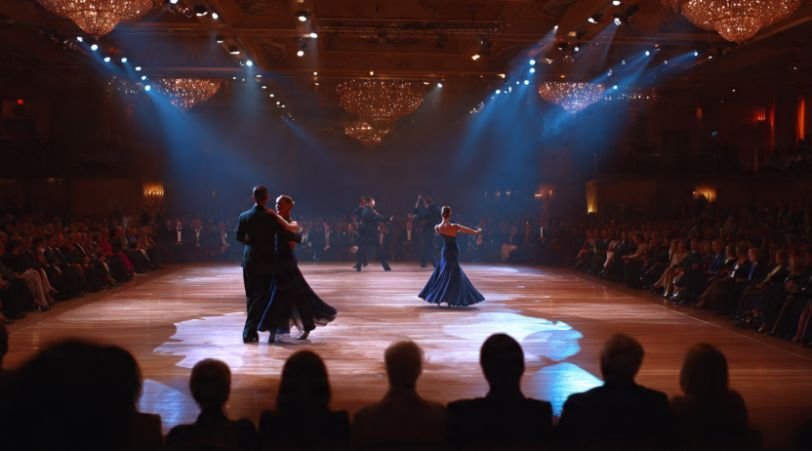
Improving your score requires a focused and strategic approach. Simply practicing more is not enough—you need to practice the right way.
Start by refining your technique through footwork exercises for ballroom dancers. Work on posture, balance, and footwork to ensure your movements are clean and controlled. Regular feedback from instructors can help identify areas for improvement.
Next, focus on musicality. Practice dancing to different types of music and pay attention to rhythm and phrasing. Try to express the mood of the music through your movements.
Partnering skills can be improved through communication and practice. Spend time working on synchronization and connection to create a more unified performance.
Finally, develop your presentation. Practice performing with energy and confidence, even during training sessions. Recording your practice can help you evaluate your performance and make necessary adjustments.
Consistency and attention to detail are key. Small improvements in each area can lead to significant gains in your overall score.
FAQs
What is the scoring basis of a dancesport competition?
DanceSport competitions are typically scored based on four main criteria: technical quality, musicality, partnering skills, and choreography/presentation. Judges evaluate each of these areas to determine overall performance quality.
Why do dancers say 5 6 7 8 instead of 1 2 3 4?
Dancers use “5 6 7 8” as a preparatory count before starting the routine on “1.” This helps establish timing and ensures that all dancers begin together in sync with the music.
What are the criteria for dance score?
The main criteria include technique, musicality, connection between partners, and artistic presentation. Each of these contributes to the final score and overall ranking.
What are the 7 elements of dance?
The seven elements of dance are body, action, space, time, energy, relationship, and movement. These elements define how dance is structured and performed.
Master the Art of Scoring High in DanceSport
Understanding DanceSport scoring criteria gives you a clear advantage as a dancer. Instead of guessing what judges want, you can train with purpose and focus on the areas that truly matter.
By balancing technique, musicality, connection, and presentation, you can create performances that are not only technically strong but also visually engaging. This combination is what sets top dancers apart.
Improving your score is not about perfection—it’s about consistency, awareness, and continuous growth. With the right approach, you can elevate your performance and stand out on any dance floor.